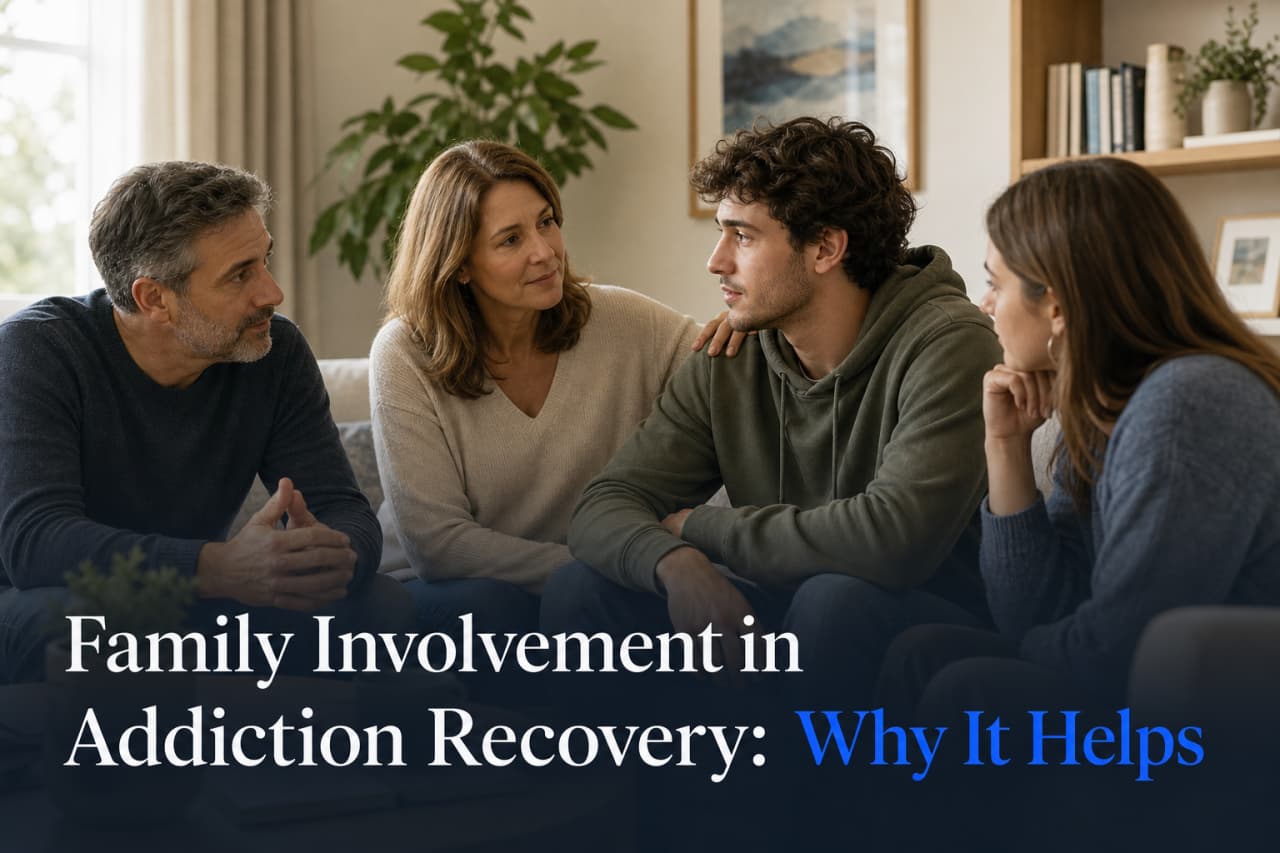
Arguments that once ran for an hour can end in five minutes once a family has shared language and a plan. The Family Recovery Foundation offers free virtual sessions nationwide with no insurance required. Families who join often notice the benefits of free family therapy in ordinary moments first: shorter fights, firmer boundaries they can keep, less isolation, and a clearer sense of what they can control when a loved one's substance use or mental health concerns shape the day.
Your loved one's substance use may not shift on your schedule. Family therapy can still change what happens before, during, and after a hard conversation. Pause. Pick one boundary you can hold. Ask for support before you decide. Those gains matter even when the larger situation stays unsettled.
Families who work with TFRF usually describe changes you can see. They learn to set boundaries with care, speak with less blame, treat addiction as a disease rather than a moral failure, and name what is actually happening at home.
If you are unsure about joining, use a practical test. Watch for actions you can measure: shorter fights, clearer requests, written plans, and less secrecy around asking for help. Free programs remove the money barrier. Practice still decides whether anything sticks.
Early benefits of free family therapy
Clarity often arrives before calm. The 12-module Intensive Family Program gives families shared language for addiction, codependency, communication, and boundaries. Module 6 covers difficult conversations. Modules 7 and 8 focus on boundaries and the words used to state them.
Shared language helps you separate facts from guesses. A missed call is a fact. Treating that missed call as proof your loved one has returned to use is an assumption unless you have more information. Therapy slows that jump so you can choose a response instead of reacting on instinct.
Education also changes how families read substance use. The National Institute on Drug Abuse explains drugs and the brain in plain language. TFRF's curriculum connects that science to communication, family roles, and daily decisions.
No module chooses for your loved one. It can show you which choices belong to you.
Clarity changes the next choice.
How communication can change at home
Specific language usually beats accusation. Fix Your Family, TFRF's national signature program, meets every Monday at 7:00 PM CT and 5:00 PM PT. Sessions teach communication strategies, boundary-setting techniques, and concrete ways to handle conflict.
A direct statement names what happened and what you will do next. You might say, "I won't lend money. I can sit with you while you call a treatment provider." During a threatening call, you might say, "I'm ending this conversation. We can speak tomorrow if the call is calm."
These lines stay on your behavior. They leave less room to argue about motives, old mistakes, or promises no one can verify. You also avoid threats you will not carry out.
Talk may still hurt. Progress can mean ending a circular fight after five minutes instead of an hour. It can mean asking one clear question and hearing the answer without trying to fix the whole situation on the spot.
Shorter can be kinder.
Clearer boundaries and what shifts
Clear boundaries name the action you will take. The Courage to Detach workshop meets on the last Wednesday of each month at 5:00 PM CT and 3:00 PM PT. It focuses on loving a family member without enabling harmful behavior.
Refusing cash while offering to pay a treatment provider directly is one money boundary. A housing rule might state what behavior is allowed in your home and what you will do if that agreement breaks. Ending calls that turn into threats or verbal attacks is a phone limit many families write down and keep.
Healthy detachment keeps care and self-protection in the same decision. You can share treatment information and still refuse to cover missed work, unpaid bills, or legal trouble. You can care deeply and stop carrying another adult's choices.
Your follow-through is the measure. Your loved one does not have to approve.
Boundaries need follow-through.
Why virtual access matters for families
Free online access takes program fees and travel out of the decision. TFRF offers virtual family therapy and live online family support nationwide. The free programs do not require insurance.
Virtual sessions also fit when relatives live in different cities or juggle work and caregiving. You join from home, then practice in the same rooms where hard calls and family decisions already happen.
The Family Recovery Foundation is a 501(c)(3) nonprofit. Our work is clinically facilitated and carries a Christian faith-based orientation. Review the About page before you register if you want a fuller picture of the mission and approach.
Family therapy works on family patterns. A person with a substance use disorder may still need assessment, detox, outpatient care, or residential treatment. The SAMHSA treatment locator helps families search for services, and TFRF accepts applications for financial aid for treatment and intervention.
The Family Recovery Foundation provides ongoing family support. Residential treatment, detox, and emergency response are not among our services. Call 911 for immediate danger. For a mental health or suicide crisis in the United States, call or text 988 or visit the [988 Suicide & Crisis Lifeline](https://988lifeline.org/).
Access matters.



Matching a family program to the change you need
The right entry point depends on what your family needs this week. Fix Your Family fits best when you want structured teaching on communication, conflict, and boundaries. It meets Monday evenings.
The Family Room suits people who want to hear from other families, ask questions, and get guidance from peer advocates. This open-format online family support group meets every Friday at 10:00 AM CT and 8:00 AM PT.
Morning Meditation is a shorter routine. The guided practice runs 15 minutes, Monday through Friday at 9:00 AM CT and 7:00 AM PT. It gives you a fixed time to pause before the day's calls and decisions start.
Courage to Detach is the stronger fit for focused work on enabling and self-protection. If you need to talk through your family's specific situation, 1-on-1 family coaching is available by appointment with a certified counselor.
Registered families also get a private messaging group with TFRF's Clinical Director and trained peer support team. Access runs 24/7 for guidance between scheduled sessions.
You can begin small.
How changes become part of family life
New patterns form through repeated practice. One strong statement in a single session will not undo months or years of reactive talk. You need chances to use the words, notice what happened, and adjust.
TFRF's on-demand curriculum gives material to revisit between live sessions. Module 10 covers the transition home after treatment. The downloadable Family Support Plan helps family members write roles and responses before pressure rises.
The Relapse Prevention Plan can guide talks about warning signs and next steps if a loved one experiences a recurrence of substance use. Writing the plan ahead cuts the need to invent one in a tense moment.
One week, change may look like leaving a heated call before threats start. Another week, it may mean checking your Family Support Plan before you agree to a request. A parent may stop tracking a grown child's location every hour. A spouse may tell one trusted person what has been happening at home.
Free virtual family therapy cannot promise that your loved one will enter treatment or stop using substances. It can give your family structured practice, accurate education, and contact with people who already know this work.
Expect uneven weeks.
Questions Readers Ask
Do I need insurance for free virtual family therapy?
No. Our free virtual family therapy and live online family support programs do not require insurance. Registration is available through our family programming and meetings pages.
Can I join if my loved one isn't in treatment?
Yes. TFRF's family programming is open when a loved one is currently using substances, entering treatment, or coming home from a program. You can work on communication and boundaries without waiting for another person to join.
Will family therapy make my loved one stop using substances?
No program can guarantee that outcome. Family therapy focuses on the patterns, choices, and responses within your control. Your loved one may still need direct treatment for a substance use disorder or mental health condition.
Is The Family Recovery Foundation a treatment center or detox?
The Family Recovery Foundation is a nonprofit that provides family therapy, online support groups, coaching, education, and application-based financial aid. Residential treatment, detox services, and emergency care are not provided by TFRF.
What should I do during an emergency?
Call 911 if someone is in immediate danger. Call or text 988 for a mental health or suicide crisis in the United States. TFRF's ongoing family programs can support you before and after a crisis, but they do not replace emergency care.
Get free virtual family therapy
Register for free nationwide online family therapy and support programs. No insurance required.
Use the Get Help option on our website, or register through the family programming or meetings page. If you are unsure which program fits your family, call 888-964-8825. A real person answers every day.
About the Author
The Family Recovery Foundation
Editorial TeamEducational and program resources from The Family Recovery Foundation (EIN 87-4108362) — free virtual family therapy and support for families impacted by addiction and mental health. Charity Navigator: charitynavigator.org/ein/874108362.