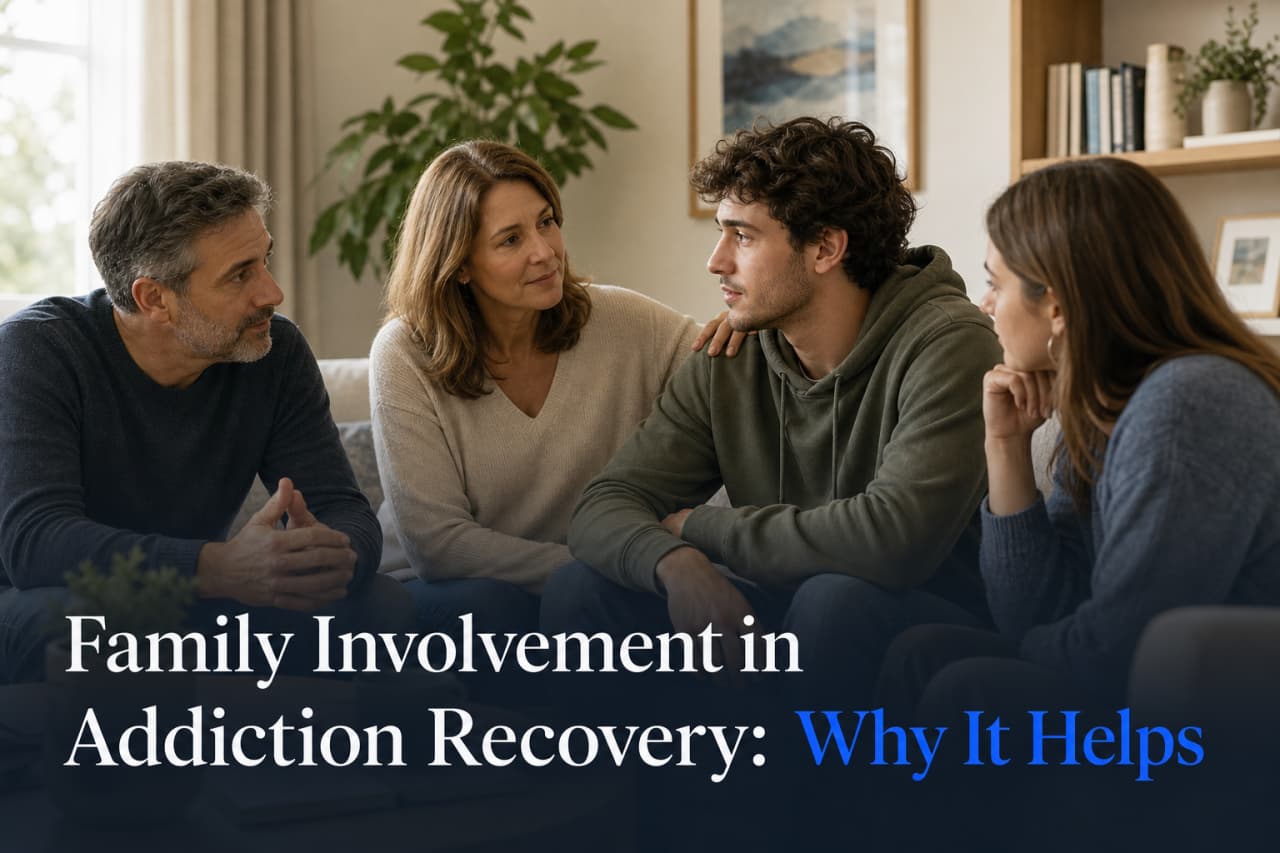
A relative who covers rent still cannot force someone into treatment. How you answer a late-night request, and what you do with cash when a plan collapses, sits inside your control. That limited authority is the real stake in family involvement in addiction recovery. It can strengthen communication and follow-through at home. It cannot force another person into care or stop every return to use.
Keep the claim small. Family participation can raise recovery odds by changing patterns relatives actually control. No honest program can hand your family a guaranteed result. Skepticism helps. It points you toward observable actions instead of slogans.
Why family involvement in addiction recovery improves conditions
It alters the day-to-day system around the person. Relatives do not cause a substance use disorder. They cannot cure one. They can change how they talk, respond to requests, manage money, set limits, and react when agreements break.
The case rests on those mechanisms. The National Institute on Drug Abuse publishes science-based education on addiction and the brain. SAMHSA’s Substance Use Disorder Treatment and Family Therapy describes care that addresses family relationships and recurring patterns alongside substance use disorder treatment.
One clear message leaves less room for bargaining. A specific boundary gives everyone a known response. Calmer language can keep a hard talk on the current decision instead of ten old arguments.
Our 12-module Intensive Family Program teaches these skills directly. Topics cover the definition of addiction, difficult conversations, codependency, boundaries, gaslighting, and preparing for a loved one to return home after treatment. You leave with language you can use in ordinary talks and tense moments.
Your influence is real, limited, and worth using carefully.
What useful family involvement looks like
Useful involvement stays specific and inside your control. It has to be repeatable. Broad demands such as “You need to change” rarely tell anyone what happens next. A clear statement does: “I can drive you to your appointment, and I won’t provide cash.”
Boundaries should name your action. “You can’t use substances” tries to run another person’s life. “You can’t stay in my home while using substances” states a condition you can enforce. The second version gives accurate information before a decision.
Practical support can mean attending a scheduled family session, helping with transportation, keeping agreed check-in times, or following a written home plan. Ask the treatment team what role relatives can play. Then pick responsibilities you can keep.
Your own support matters. The Family Recovery Foundation offers free virtual family therapy, online family support groups, 1-on-1 family coaching, and on-demand education. Our Family Support Plan worksheet helps relatives record boundaries, contacts, and agreed responses before pressure rises.
Write one boundary in this format: If this happens, I will take this action. Choose an action you control and can repeat.
Consistency beats intensity.
When support turns into enabling or control
Support turns into enabling when a relative keeps shielding a person from consequences in ways that protect the substance use pattern. That can look like covering missed responsibilities or handing over unrestricted money after earlier agreements were broken. Families work this line in our Courage to Detach workshop, held the last Wednesday of each month.
Context still matters. Paying a necessary bill directly can protect housing or health without putting cash in someone’s hands. A family coach or therapist can help you weigh the likely effect of a choice before you make it.
Control creates a different problem. It can mean tracking every movement or issuing threats you will not carry out. Those moves can drain the family’s time while the person’s choices stay the same.
Our monthly Courage to Detach workshop focuses on loving a person without enabling substance use and setting compassionate boundaries that also protect your wellbeing. It is part of our free online family programming.
Love needs limits.
Why family participation cannot guarantee recovery
Recovery decisions stay with the person who has the substance use disorder. A loved one may decline treatment, leave a program, stop following a plan, or return to use. A family can respond with skill and still face an outcome it did not choose.
Family participation may make communication clearer and support treatment follow-through. It cannot erase every health concern, outside influence, access barrier, or personal decision. That limit should shape every promise made to families.


The Family Recovery Foundation is a 501(c)(3) nonprofit that provides ongoing family care. Residential treatment, detox, and emergency response fall outside our services. We offer free virtual family therapy and support, plus application-based financial aid for treatment and intervention services.
Families seeking treatment information can also review SAMHSA guidance for helping someone. General education can help you prepare questions. Clinical decisions should come from qualified care providers who know the person’s situation.
You can help without claiming control.
How skeptical relatives can test family support
Start with one free session and judge it by what you can use. Pick one boundary to practice. Track whether you followed it, kept your tone steady, and avoided the same argument. Your own behavior is the first measure because it is the part you control.
Fix Your Family meets every Monday at 7:00 PM CT and 5:00 PM PT. This structured session covers communication and boundary-setting during conflict. The Family Room meets Fridays at 10:00 AM CT and 8:00 AM PT for open discussion and guidance from peer advocates.
Our programs are free, online, and available nationwide. No insurance is required. The free virtual family therapy hub explains the available care. The family programming page lists live sessions and registration details.
A useful session should leave you with an action you can name. Immediate change from your loved one sits outside your control. Look first for clearer decisions and more consistent limits. Build a better plan for the next conversation from there.
Questions Readers Ask
Does family involvement mean attending every appointment?
No. Useful involvement depends on the treatment plan, the person’s consent, and the role you can perform consistently. Your role may involve family sessions, transportation, home agreements, or separate coaching for relatives.
Can family therapy help if my loved one won’t participate?
Family therapy can still help you examine communication, boundaries, enabling, and your response to recurring conflict. It will not force your loved one into care. You can still change the family patterns that fall within your control.
Are The Family Recovery Foundation’s programs free?
Yes. We provide free virtual family therapy and live online support nationwide, with no insurance required for free programs. 1-on-1 family coaching and family education are also available.
Is The Family Recovery Foundation a treatment center or detox?
No. We are a nonprofit providing family therapy, coaching, education, support groups, and financial aid for treatment. We are also unrelated to the Ohio organization called Family Recovery Center.
Does the program include a faith-based approach?
Yes. The Family Recovery Foundation is clinically facilitated and has a Christian faith-based orientation. Our identity combines family support, education, and spiritual care.
What should I do during an immediate crisis?
Call 911 for an immediate emergency. Call or text 988 for a suicide, mental health, or substance use crisis. The Family Recovery Foundation provides ongoing family support and is not a crisis hotline.
Get free virtual family therapy
Register for free nationwide online family therapy and support programs. No insurance required.
Get Help. Use the Get Help page to register, or call 888-964-8825. A real person answers every day.
About the Author
The Family Recovery Foundation
Editorial TeamEducational and program resources from The Family Recovery Foundation (EIN 87-4108362) — free virtual family therapy and support for families impacted by addiction and mental health. Charity Navigator: charitynavigator.org/ein/874108362.