Free virtual family therapy is available nationwide through The Family Recovery Foundation, with no insurance required for free programs. If you searched for “support for spouses of addicts,” this spouse-specific path can help you protect your well-being, set clearer boundaries, and choose which support fits next.
What should you do first when addiction affects your marriage?
Start by separating an emergency from an ongoing family problem. Call 911 if you or someone else is in immediate danger. Call or text the 988 Suicide & Crisis Lifeline during a suicidal, mental health, or substance use crisis.
The Family Recovery Foundation provides ongoing family support. We aren't a crisis hotline, detox program, or residential treatment center.
For an ongoing problem, choose one issue that is affecting you this week. Name what happened, how it affected your daily life, and which part of your response you control. This keeps the focus on your decisions instead of another promise your spouse may or may not keep.
The Intensive Family Program covers active addiction, treatment transitions, boundaries, communication, enabling, and the return home after treatment. You can use this material even when your spouse's choices haven't changed.
Your needs belong in the plan.
Which support for spouses of addicts is the best first step?
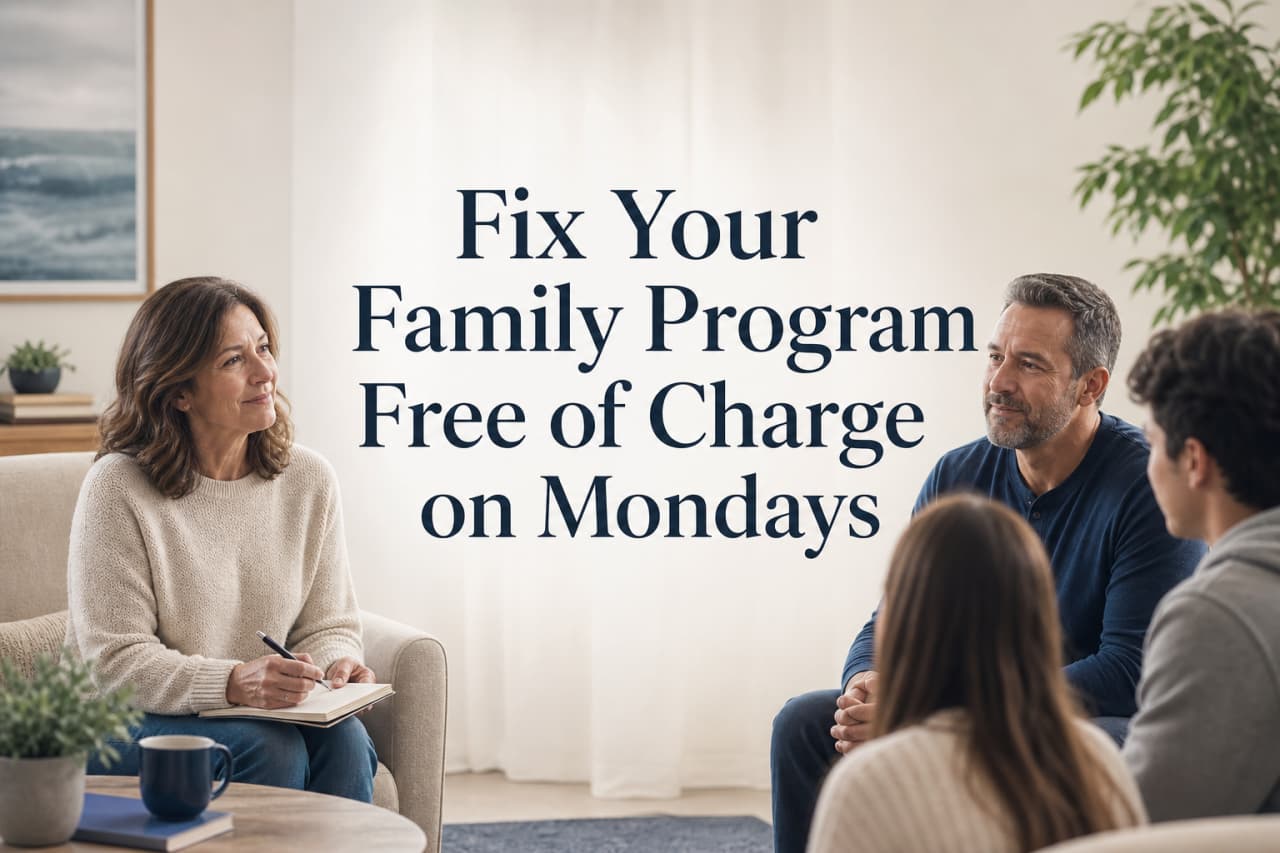
For most spouses, Fix Your Family is the strongest first live session because it teaches communication, boundary-setting, and conflict resolution in a structured format. Beth Durling, MS, CADCII, ICADC, leads the program every Monday at 7:00 PM CT and 5:00 PM PT.
| Program | Choose it for | Schedule |
|---|---|---|
| Fix Your Family | Structured work on communication, boundaries, trust, and conflict | Mondays at 7:00 PM CT / 5:00 PM PT |
| The Family Room | Open discussion, questions, and guidance from peer advocates | Fridays at 10:00 AM CT / 8:00 AM PT |
| The Courage to Detach | Loving your spouse without enabling and protecting your own well-being | Last Wednesday of each month at 5:00 PM CT / 3:00 PM PT |
| 1-on-1 Family Coaching | A private plan based on your family's current situation | By appointment |
The free virtual family therapy hub brings together therapy, online support groups, coaching, and education. Programs are available nationwide. No insurance is required for free programs.
The programs serve spouses, parents, siblings, and other loved ones. Your spouse-specific path comes from choosing the sessions and tools that address what is happening in your home, your relationship, and your own emotional health.
What can you change when your partner keeps using substances?
You can change your boundaries, communication, and response to unsafe or harmful behavior. You can't control your spouse's substance use, treatment decisions, or honesty.
A clear boundary describes your action. It doesn't depend on forcing your partner to agree. Use these four steps.
- 1Name an observable behavior without labeling your spouse. Focus on what happened rather than making a judgment about character.
- 2State the action you will take. Choose something within your control, such as arranging separate transportation or declining to provide cash.
- 3Name the condition clearly. Explain when the boundary applies and what you will do if the behavior happens.
- 4Follow through when it is safe. Don't announce or enforce a boundary during threats, violence, or an immediate crisis.
A connective boundary may sound like this: 'I care about you. I won't ride in a car after you have used alcohol or drugs. I'll arrange my own ride.'
Healthy detachment means separating love from responsibility for your partner's choices. The Courage to Detach workshop addresses this directly. The monthly session teaches families how to reduce enabling, set limits with compassion, and protect their well-being.
The 12-module Intensive Family Program gives you a deeper structure. Modules cover codependency, difficult conversations, boundaries, connective boundary language, gaslighting, and the transition home after treatment. Downloadable materials include a Family Support Plan and a worksheet titled Relapse Prevention Plan.
For plain-language information about how repeated substance use can affect the brain and behavior, read the National Institute on Drug Abuse overview of addiction. Education can help you describe the problem accurately without reducing your spouse to a diagnosis.
How can free online support fit into your week?
Choose one live program and one tool you can use between sessions. A smaller plan is easier to repeat than trying to attend every meeting at once.
For example, you could attend Fix Your Family on Monday evening and use Morning Meditation during the week. Morning Meditation is a 15-minute guided practice held Monday through Friday at 9:00 AM CT and 7:00 AM PT.
If Friday mornings fit better, The Family Room offers an open format where you can share an experience, ask a question, or listen. You don't have to explain your entire marriage before receiving guidance.
Registered families can also use a private messaging group with the Clinical Director and trained peer support team. Access is available 24/7 for ongoing guidance. Emergency response remains outside this channel, so use 911 or 988 when immediate help is needed.


The Family Recovery Foundation is clinically facilitated and has a Christian faith-based orientation. That identity may matter as you decide which family support fits your values and needs.
Keep the plan workable.
When does your family need treatment or emergency care?
Use emergency or treatment resources when the need goes beyond family therapy and support. Immediate danger requires 911. A suicidal, mental health, or substance use crisis requires 988.
Residential treatment, outpatient care, and detox are delivered by treatment providers. The Family Recovery Foundation can provide application-based financial aid when cost blocks access to treatment or professional intervention services.
You can also search the national SAMHSA treatment locator for substance use and mental health treatment providers. Family programming can continue to support your boundaries and communication while your spouse receives care elsewhere.
The Family Recovery Foundation described here is a nationwide 501(c)(3) nonprofit. It is a separate organization from the Ohio Family Recovery Center.
Frequently Asked Questions
Are the online family programs really free?
Yes. The Family Recovery Foundation offers free virtual family therapy and live online family support nationwide, with no insurance required for free programs.
Can I attend if my spouse refuses treatment?
Yes. The family curriculum addresses situations ranging from active addiction to treatment and the transition home, so your participation doesn't depend on your spouse attending with you.
Is virtual family therapy the same as couples therapy?
The Foundation's virtual family therapy focuses on how addiction affects the family system, including boundaries, communication, enabling, and your own response. Couples therapy may address broader relationship concerns and should be discussed with an appropriate provider.
What if I want private support instead of a group?
You can request 1-on-1 family coaching by appointment. Registered families may also use the private messaging group for ongoing guidance from the Clinical Director and trained peer support team.
What happens after I register?
You receive a confirmation email with session times and links to join. You can then choose the live program that best fits your schedule and current concern.
Can The Family Recovery Foundation place my spouse in detox?
The Foundation doesn't operate detox or residential care. It offers application-based financial aid for residential, outpatient, and detox programs, along with funding guidance for professional intervention services.
Get free virtual family therapy
Register for free nationwide online family therapy and support programs — no insurance required.
Select Get Help to register for family programming or request 1-on-1 support.
You can also call The Family Recovery Foundation at 888-964-8825. A real person answers every day.
About the Author
The Family Recovery Foundation
Editorial TeamEducational and program resources from The Family Recovery Foundation (EIN 87-4108362) — free virtual family therapy and support for families impacted by addiction and mental health. Charity Navigator: charitynavigator.org/ein/874108362.