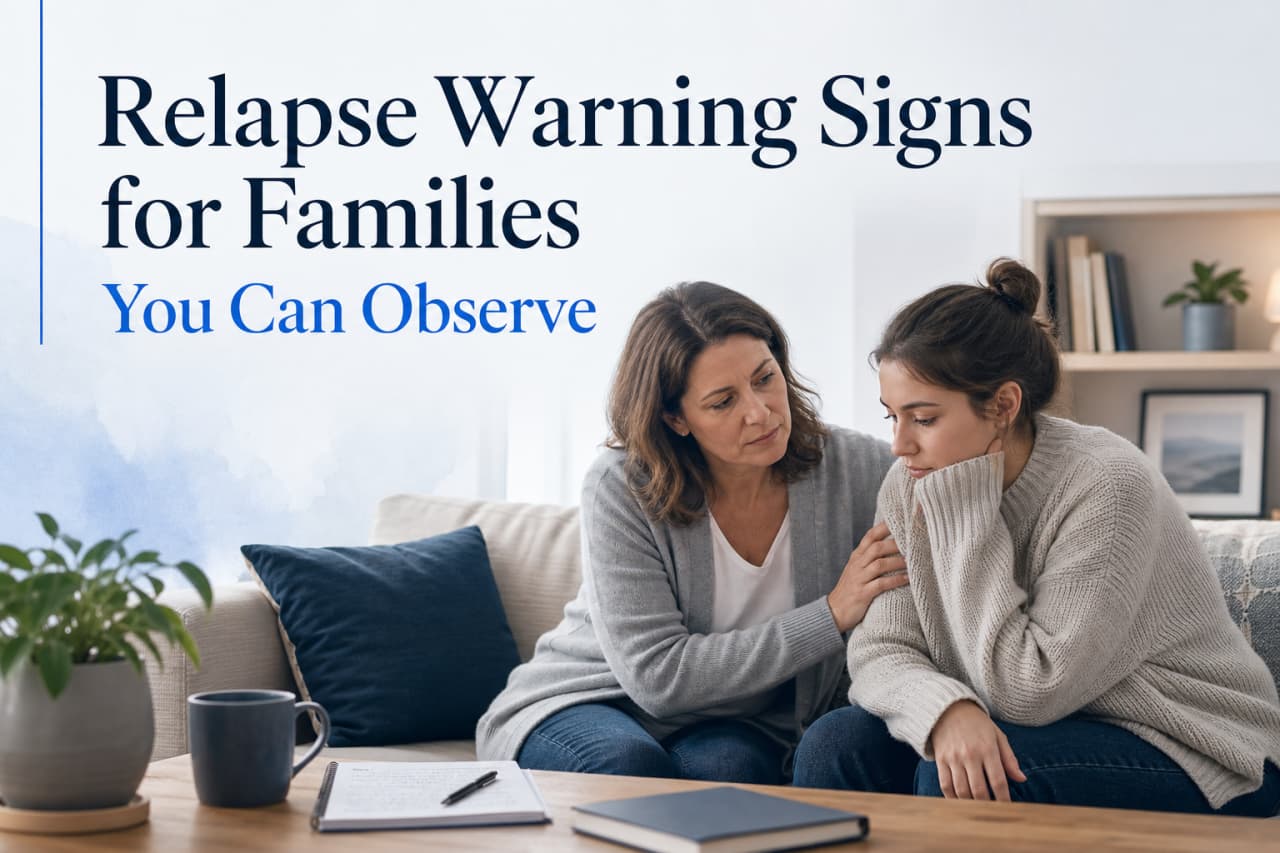
Missing money, a broken promise, or one more late-night call can flood a kitchen with heat before anyone has chosen a single word. Anger at loved one addiction often arrives first. Pause before you speak, name the specific behavior, set a boundary you can keep, and bring the raw feeling to therapy or a family group.
Anger is information. It may point to fear, grief, financial harm, lost trust, or a limit that got crossed. Treat the feeling as a signal. Then choose words and actions that protect your family without attacking the person you love.
Why a loved one’s substance use creates so much anger
Repeated uncertainty keeps anger close to the surface. You may hear a promise in the morning and face a different reality that night. A spouse may be left managing bills or children alone. A parent may wait for a call that never comes.
The anger often has several targets. You may be angry about substance use, secrecy, unsafe choices, treatment refusals, or the effect on other family members. Naming the exact target matters. Broad accusations such as “You’ve ruined everything” leave no clear behavior to address.
The National Institute on Drug Abuse explains how substance use disorders can affect reward, stress, and self-control. That context can explain some behavior without excusing threats, financial harm, or broken agreements.
Our 12-module Intensive Family Program begins with the definition of addiction. Later modules address manipulation, enabling, difficult conversations, gaslighting, and boundaries. That structure helps you separate the disease from the choices and family patterns that still require a response.
Aim your anger carefully.
What to do in the first few minutes of anger
Create a short pause before you send a message, confront your loved one, or make a lasting decision. If no one is in immediate danger, move to another room, put down the phone, and write four brief lines.
Record only what you directly saw, heard, or found. Name the feeling in plain words such as angry, afraid, hurt, or exhausted. Choose the immediate issue rather than the entire history. Pick one step that depends on you, not your loved one’s agreement.
Those lines separate the event from the meaning you’re giving it. “They missed our agreed call” is an event. “They’ve never cared about this family” is a conclusion. You can address the event now and leave the larger conclusion for therapy or a calmer conversation.
Regular practice makes pausing more familiar. The Family Recovery Foundation offers Morning Meditation Monday through Friday at 9:00 AM CT and 7:00 AM PT. Each guided practice lasts 15 minutes and focuses on mindfulness, emotional regulation, and resilience.
If stepping away would increase danger, skip the writing exercise and seek emergency help. Safety comes before a family conversation.
Pause first.
How to express anger without attacking
Use one observable event, name your feeling, and state the action you’ll take. Specific language gives your loved one something concrete to hear, even if they disagree.
Start with a fact both of you can identify. “You missed the agreed pickup on Tuesday” is specific. “You always abandon us” attacks the person’s identity and pulls every past injury into one argument.
For example, a spouse might say, “I’m angry that bill money left our account after our agreement. I’m moving future bill money to an account I manage. We can discuss expenses tomorrow morning if we’re both able to speak calmly.”
A parent could say, “I love you, and I’m angry about the threats made during our last call. I’ll end future calls when threats begin. I’m willing to talk again the next day.” The message preserves care while naming the behavior and the consequence.
Avoid demanding a confession or arguing about a diagnosis during a heated exchange. Your immediate task is to address the behavior, state your limit, and end the conversation if insults or threats continue.
Our Fix Your Family session teaches communication, boundary-setting, and conflict resolution skills every Monday at 7:00 PM CT and 5:00 PM PT. Beth Durling, MS, CADCII, ICADC, leads this national signature program.
Name the behavior. Keep the person’s dignity.
Boundaries that still protect connection
A workable boundary states what you will do after a specific behavior. It doesn’t depend on forcing your spouse or adult child to admit the problem, enter treatment, or agree that your limit is fair.
Conversation limits can sound like, “I’ll end the call if yelling or threats begin.” Money limits can sound like, “I won’t provide cash. I can consider paying an approved bill directly.” Home limits can sound like, “I won’t allow substance use in my home. I’ll follow the safety plan I prepared if it happens.” Child-safety limits can sound like, “I’ll arrange another caregiver when I believe substance use has made supervision unsafe.”
Choose only actions you can carry out safely. Housing and custody decisions may involve legal rights that differ by location, so get qualified guidance before making a major change. Threats, violence, and immediate danger require emergency help rather than a boundary discussion.
Staying connected doesn’t require unlimited access to your money, home, children, or attention. You can care about someone while ending a harmful conversation or refusing to fund substance use.
The Courage to Detach workshop meets on the last Wednesday of each month at 5:00 PM CT and 3:00 PM PT. It focuses on loving without enabling, setting limits with compassion, and protecting your wellbeing. Modules 7 and 8 of our Intensive Family Program also cover boundaries and the language used to communicate them.



Keep the boundary you name.
Where to bring anger at loved one addiction for free support
Bring the strongest version of your anger to therapy, coaching, or a family group before asking your loved one to absorb it. That gives you room to speak honestly, test your planned boundary, and hear from people who know how addiction affects an entire family.
The Family Recovery Foundation provides free virtual family therapy and live online family support nationwide. No insurance is required for free programs. Our foundation is clinically facilitated and has a Christian faith-based orientation.
Fix Your Family meets every Monday for structured communication and boundary work. The Family Room meets every Friday at 10:00 AM CT and 8:00 AM PT for open discussion and peer guidance. Morning Meditation runs Monday through Friday as a 15-minute guided practice. The Courage to Detach offers a monthly workshop on limits, enabling, and self-protection.
One-on-one family coaching is available by appointment with a certified counselor. Families can also use a private messaging group with our Clinical Director and trained peer support team. Our free virtual family therapy hub and family programming page list current ways to join.
You need support too.
When anger requires immediate safety action
Call 911 when someone is in immediate danger, a medical emergency is happening, or you believe violence may occur. The official 911 website explains how emergency calling works across the United States.
Call or text 988 for suicide-related concerns, severe emotional distress, or a mental health crisis. The 988 Suicide & Crisis Lifeline also offers online chat. If you think you may hurt your loved one, create physical distance and contact 988 or 911 based on the immediate risk.
Our services cover ongoing family support. Emergency response, detox, and residential treatment fall outside those services. Don’t wait for a scheduled family group when someone’s life or physical safety may be at risk.
After the immediate danger has passed, call The Family Recovery Foundation at 888-964-8825 for ongoing family support. A real person answers every day.
Questions Readers Ask
Is it wrong to feel angry with someone who has a substance use disorder?
Feeling angry doesn’t make you disloyal or unloving. Anger may point to a broken agreement, fear for someone’s safety, financial harm, or exhaustion. Your responsibility begins with how you express it and what you do next.
Should I tell my loved one how angry I am?
Yes, if you can speak safely and focus on a specific behavior. Wait until the immediate heat has passed, avoid labels, and state the boundary you’ll carry out if the behavior happens again.
Can I attend if my loved one refuses treatment?
Yes. Our family programs support people whose loved ones are using substances, considering treatment, currently in care, or returning home. Your loved one doesn’t have to participate for you to attend.
Are the virtual family programs really free?
Yes. The Family Recovery Foundation offers free virtual family therapy and online support programs nationwide, with no insurance required for free programs. Registration, session links, and scheduling details are provided online.
What if treatment costs are adding to my anger?
You can apply for financial aid through The Family Recovery Foundation. Assistance is application-based and may cover residential, outpatient, or detox programs. We also provide funding guidance for professional intervention services.
Is this the Family Recovery Center in Ohio?
No. The Family Recovery Foundation is a 501(c)(3) nonprofit that provides free nationwide virtual family therapy, online family groups, coaching, education, and financial aid for treatment.
Get free virtual family therapy
Register for free nationwide online family therapy and support programs. No insurance required.
Choose Get Help to register, or call 888-964-8825. A real person answers every day.
About the Author
The Family Recovery Foundation
Editorial TeamEducational and program resources from The Family Recovery Foundation (EIN 87-4108362) — free virtual family therapy and support for families impacted by addiction and mental health. Charity Navigator: charitynavigator.org/ein/874108362.