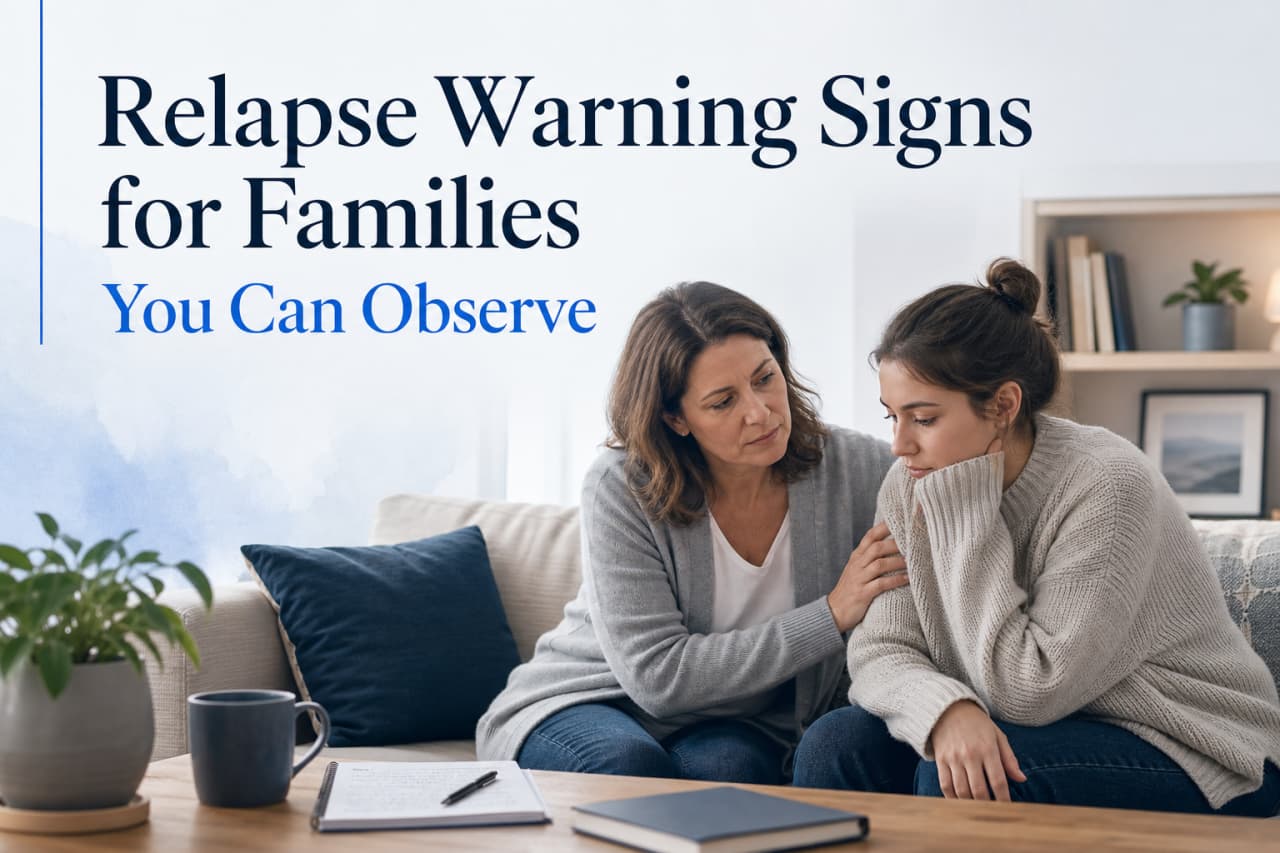
Over-functioning can leave you managing appointments, money, conflict, and another adult’s choices while your own needs disappear. Self care for a family member of an addict starts with three moves you control: one daily limit, scheduled family support, and the sleep, meals, or medical care you’ve been postponing.
We use person-first language because your loved one is a person, not a diagnosis. Substance use disorder can affect the whole household, and it does not erase anyone’s dignity. The National Institute on Drug Abuse offers clear background on addiction and the brain.
The “strong one” often becomes the planner, fixer, peacekeeper, and emergency contact. That role may have carried your family through a hard season. It can also harden into a pattern that leaves no room for your health, work, friendships, or faith.
What does over-functioning look like?
Over-functioning means you keep taking responsibility for tasks, consequences, or decisions that belong to another adult. You may call their employer, cover unpaid bills, monitor their phone, explain their behavior to relatives, or spend the day trying to predict the next crisis.
Some duties do belong to you. Caring for a dependent child, protecting shared finances, and responding to an immediate safety threat require action. Trouble starts when constant rescue becomes the default, even when no one is in immediate danger.
Look at what the role costs. Canceled appointments. Missed work. Friends you stopped seeing. Nights spent awake waiting for a call. Those are concrete signs that another person’s substance use is running your schedule.
The Family Recovery Foundation’s 12-module Intensive Family Program covers codependency, enabling, communication, and boundaries. Modules 7 and 8 focus on where you end and another person begins, then put that line into plain words.
You can care deeply without taking ownership of another adult’s recovery.
What kind of self care helps a family member of an addict?
Useful self-care returns responsibilities to the adults who own them and protects one basic part of your day. A temporary distraction may feel better for an hour. A working plan changes what you agree to do tomorrow.
Separate what is yours from what is theirs. Write down the decisions you control, such as attending a support session, protecting your money, or leaving a hostile conversation. Put another adult’s treatment attendance, honesty, and substance use in a second column. Choose one limit you can keep. You might stop lending money, refuse to lie to an employer, or end phone calls when shouting starts. Pick an action you control rather than a demand that depends on their cooperation. Restore one neglected need next. Schedule the medical visit, eat at a regular time, take prescribed medication as directed, or go to bed without tracking another adult’s location. Keep it small enough to repeat. Then put family support on the calendar. The Family Recovery Foundation offers free virtual family therapy, online family support groups, and 1-on-1 family coaching nationwide, and no insurance is required for free programs.
Self-care cannot make another person accept treatment. It can give you a steadier process for deciding what you’ll do, what you’ll stop doing, and when you need outside guidance.
Your life still counts.
For national education and treatment information, SAMHSA’s resources for families can supplement the support you receive through our free sessions.
Which free session fits your self-care plan?
Match the session to the pressure you face this week. The Family Recovery Foundation runs recurring online options so support becomes a scheduled practice, not another task you hope to squeeze in.
| Program | Schedule | Best fit |
|---|---|---|
| Morning Meditation | Monday through Friday at 9:00 AM CT / 7:00 AM PT | A 15-minute daily practice for grounding and emotional regulation |
| Fix Your Family | Monday at 7:00 PM CT / 5:00 PM PT | Communication, boundaries, conflict resolution, and rebuilding trust |
| The Family Room | Friday at 10:00 AM CT / 8:00 AM PT | An open-format group for sharing experiences and asking questions |
| The Courage to Detach | Last Wednesday of each month at 5:00 PM CT / 3:00 PM PT | Healthy detachment, compassionate limits, and reducing enabling |
| 1-on-1 Family Coaching | By appointment | A personal family plan developed with a certified counselor |
Start with Morning Meditation if your day begins with checking messages, scanning for problems, or bracing for conflict. Fifteen minutes. A clear start and a clear end.
Choose Fix Your Family when you need words for a hard conversation. Beth Durling, MS, CADCII, ICADC, leads the session and focuses on communication, boundaries, and conflict resolution.
The Family Room fits people who need to hear from families facing similar decisions. The Courage to Detach gives a tighter setting for loving someone without covering consequences or abandoning your own wellbeing.
Use 1-on-1 Family Coaching when group discussion does not touch a specific household problem. Coaching is by appointment and builds a plan around your family’s situation.
Support belongs on the calendar.
How can you set limits when guilt takes over?
A usable boundary states what you will do under a specific condition. It does not depend on another person agreeing, apologizing, or changing.
You might say, “I’ll talk with you when we can speak without threats,” or “I won’t provide cash, but I can share treatment information.” Each line names your action. Neither tries to control the other person.



Guilt may show up after you stop rescuing. Treat that feeling as information, not an order. Bring the situation to Fix Your Family, The Family Room, or a coaching appointment before you reverse a limit you set for a clear reason.
The private family messaging group also gives 24/7 access to The Family Recovery Foundation’s Clinical Director and trained peer support team. That option helps when you need to pause and think through a response between live sessions.
Try this before responding to a non-emergency request: write down what was asked, what could happen if you say no, and which part is truly your responsibility. Then choose the action you can repeat next time.
When does the situation require emergency help?
Use emergency services when someone faces immediate physical danger, a medical emergency, or an urgent mental health crisis. Call 911 for immediate danger or a medical emergency. Call or text 988 Suicide & Crisis Lifeline for suicidal thoughts, emotional distress, or a substance use crisis.
The Family Recovery Foundation provides ongoing free family support. We are not a crisis hotline, residential treatment center, or detox facility. Our programs help families with communication, boundaries, education, and longer-term support.
After the immediate danger has passed, family therapy or coaching can help you review what happened and build a clearer response plan. You can also ask about application-based financial aid for treatment or intervention services.
If you’re unsure whether a situation is an emergency, protect life and safety first. Call 911 for immediate danger or 988 for crisis support.
What People Want to Know
Is self-care selfish while my loved one is still using substances?
No. Protecting your health and setting limits are responsibilities you can control. Your loved one remains responsible for their treatment decisions, substance use, and recovery actions.
Can I join if my loved one refuses treatment?
Yes. The Family Recovery Foundation’s education and support programs are built for families at different stages, including active substance use, treatment entry, and the return home after treatment.
Do the free programs require insurance?
No insurance is required for free virtual family therapy and support programs. Registration is available nationwide.
How are therapy, support groups, and coaching different?
The Foundation offers free virtual family therapy, recurring online groups, and 1-on-1 coaching by appointment. Groups provide shared discussion or structured education. Coaching focuses on your family’s specific decisions and plan.
What if I can’t attend every week?
You can use on-demand education between live sessions. The resource library includes 12 Intensive Family Program modules, a Relapse Prevention Plan worksheet, and a Family Support Plan worksheet.
Does The Family Recovery Foundation operate treatment or detox centers?
The Foundation does not operate a residential treatment center or detox facility. It provides family programming and application-based financial aid that may help with residential, outpatient, detox, or intervention services.
Get free virtual family therapy
Register for free nationwide online family therapy and support programs. No insurance required.
Choose Family Programming or Meetings on The Family Recovery Foundation website to view the session options. You can also use the Get Help page or call 888-964-8825. A real person answers every day.
Get Help: Choose one free session that fits your week, register, and place it on your calendar before another family emergency takes the time.
About the Author
The Family Recovery Foundation
Editorial TeamEducational and program resources from The Family Recovery Foundation (EIN 87-4108362) — free virtual family therapy and support for families impacted by addiction and mental health. Charity Navigator: charitynavigator.org/ein/874108362.