Your body can’t stay on watch all night and still get the rest it needs. If you searched “cant sleep loved one addiction,” use a night protocol: check for immediate danger, choose one boundary, write down tomorrow’s action, and stop monitoring. Call 911 for immediate danger or 988 for a suicide, mental health, or substance use crisis.
Your goal tonight is a safety decision and a stopping point. Treatment choices and hard conversations belong in daylight, when you have more information and support.
If you suspect an overdose or face immediate danger, call 911. For a suicide, mental health, or substance use crisis, call or text 988 or visit the [988 Suicide & Crisis Lifeline](https://988lifeline.org/). The Family Recovery Foundation provides ongoing family support. Emergency services handle emergencies.
Why can a loved one’s substance use keep you awake?
Uncertainty creates fresh decisions long after bedtime. A car door closes. A message goes unanswered. You hear movement in another room and wonder if you should check again. That loop can continue even when no new information arrives.
You may also feel responsible for preventing every possible outcome. Staying awake can seem like protection, but monitoring another adult all night doesn’t give you control over their substance use. It leaves you with less energy for work, caregiving, and the decisions waiting the next day.
Family education gives you language for deciding what belongs to you. The Family Recovery Foundation’s 12-module Intensive Family Program includes difficult conversations, enabling, connective boundaries, and a Family Support Plan. Those tools help you decide your response before the next late-night call.
Night needs a stopping rule.
What should your night protocol include?
Use the same five steps each night so fear doesn’t have to write a new plan at 2:00 AM.
- 1Check for an emergency once. Use what is happening now rather than every outcome you can imagine. A suspected overdose, violence, or immediate threat requires 911. Call or text 988 for a suicide, mental health, or substance use crisis. If you’re responsible for a minor, follow the safety plan established with their clinician or emergency services.
- 2Choose one check-in point. If a message is needed, send one clear sentence such as, “Please confirm that you’re safe. I’ll check my phone once before I sleep.” Repeated calls and texts can keep you alert without producing useful information.
- 3Set one boundary you control. A boundary describes what you will do. You might say, “I won’t discuss money tonight. We can talk tomorrow morning.” Don’t make your sleep depend on whether the other person agrees.
- 4Prepare the room for rest. Charge your phone, allow calls from selected emergency contacts, and silence alerts that don’t require action. Put the phone beyond arm’s reach. If conflict begins inside the home, move away from it when you can do so safely.
- 5Put tomorrow’s action on paper. Write one specific task, such as registering for family therapy, contacting a counselor, or asking about treatment financial aid. Your mind no longer has to hold that task through the night.
The protocol creates a defined response while another person’s choices remain outside your control. New, concrete information sends you back to the first step. Fear without new information doesn’t require another round of checking.
At night, respond to known danger and leave uncertain possibilities for tomorrow’s written plan.
Keep it short.
What if your loved one calls or comes home?
Use one calm sentence, repeat it once, and end the exchange if there’s no immediate danger. A person who appears impaired may argue, repeat questions, blame you, or demand an answer. Midnight rarely produces a useful family agreement.
Try a boundary you can carry out: “I care about you, and I’m going to sleep. We can talk at 9:00 tomorrow.” Another option is, “I won’t argue or make financial decisions tonight.” Avoid debating how much the person used or demanding a confession before you rest.
Safety changes the response. Move away from conflict if you can do so safely. Keep children away from the exchange, and don’t assign them the job of monitoring an adult. Call 911 if threats, violence, or another immediate danger makes the home unsafe.
Healthy detachment keeps care and responsibility separate. You can love the person while refusing an argument, money, or a cover story. The Family Recovery Foundation’s monthly workshop, The Courage to Detach, teaches families to love without enabling and set boundaries with compassion. It meets on the last Wednesday of each month at 5:00 PM CT and 3:00 PM PT.
How can you return to rest after the safety check?
Lower stimulation and give your mind one quiet task. The CDC’s sleep guidance recommends consistent sleep and wake times along with a quiet, dark, cool room. You may not control the whole house tonight, but you can dim your immediate space and stop feeding the checking loop.
Put the phone face down after setting emergency contacts to ring through. Write tomorrow’s action in a notebook. Then choose one low-stimulation activity, such as slow breathing, quiet reading, prayer, or a familiar audio practice. If lying in bed makes you more alert, sit somewhere dim and return when you feel ready to rest.
A difficult night also needs a morning plan. Our free Morning Meditation meets Monday through Friday at 9:00 AM CT and 7:00 AM PT. The 15-minute guided mindfulness practice is designed to reduce anxiety, support emotional regulation, and build resilience for families affected by addiction.
You can attend online from home. A missed night of sleep doesn’t cancel the morning. The session gives you a set time and one guided task before the day gathers speed.
Talk with a licensed health professional if sleep problems continue or affect your ability to drive, care for children, work safely, or function during the day. Family support can address the stress around substance use, while your healthcare provider can assess your sleep needs.
What should go on tomorrow’s plan?
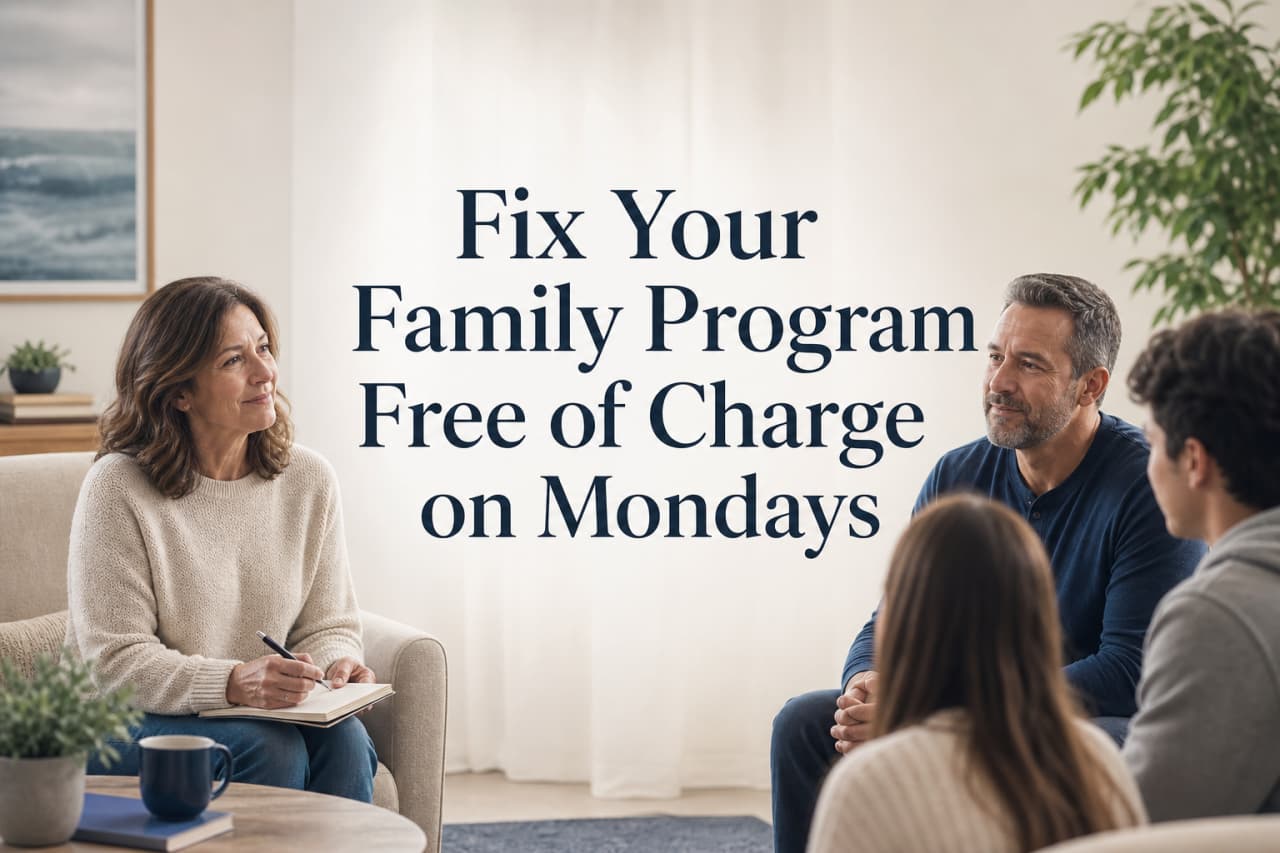
Choose one family action before you address the entire treatment question. If communication and boundaries are breaking down, Fix Your Family is the clearest place to begin. This structured weekly program meets every Monday at 7:00 PM CT and 5:00 PM PT.


The Family Room offers an open support circle every Friday at 10:00 AM CT and 8:00 AM PT. You can share what happened, ask questions, and hear guidance from peer advocates who have lived through addiction in their own families. All live sessions are led by experienced facilitators and certified counselors.
Our free virtual family therapy hub brings these nationwide online options together. The Family Programming page also includes Morning Meditation, The Courage to Detach, 1-on-1 family coaching, and on-demand education. Free programs don’t require insurance.
If the person you love needs treatment, The Family Recovery Foundation offers application-based financial aid for residential, outpatient, detox, and intervention services. We provide family support and financial aid. Residential treatment, detox, and emergency care come from separate providers. SAMHSA’s National Helpline also provides national treatment information.
Daylight is for decisions.
How can family support change repeated nights?
Repeated nights need a written family plan rather than a new argument each evening. Decide who responds to an emergency, what counts as new information, which boundary sentence everyone will use, and what action follows the next morning.
The Family Recovery Foundation offers a downloadable Family Support Plan and Relapse Prevention Plan. Your plan can address nights when a loved one is actively using substances, entering treatment, or returning home. Review it during the day, when each family member can ask questions.
Registered families can also use our private family messaging group, which connects them with our Clinical Director and trained peer support team. That group is available 24/7 for ongoing guidance. Use 911 or 988 when the situation requires emergency care.
Weekly therapy, education, and coaching give you a place to examine what happened without making the next night your only planning session. Your loved one doesn’t have to agree before you seek support for yourself.
You need a plan you can repeat.
Questions Readers Ask
Is it wrong to sleep while my loved one may be using substances?
No. Rest is a basic need, and staying awake doesn’t give you control over another adult’s substance use. Complete your safety check, follow your written boundary, and seek emergency care if concrete danger is present.
Should I keep checking my phone all night?
Choose one planned check-in unless new information points to immediate danger. Set selected emergency contacts to ring through, silence other alerts, and place the phone beyond arm’s reach.
What should I do if I suspect an overdose?
Call 911 immediately if you suspect an overdose or another medical emergency. Call or text 988 for a suicide, mental health, or substance use crisis. The Family Recovery Foundation’s programs provide ongoing care for families after the immediate crisis response.
Can I join if my loved one refuses treatment?
Yes. Our family programs support parents, spouses, siblings, and other loved ones at every stage, including active substance use. You can work on boundaries and communication before the person enters treatment.
Is Morning Meditation the same as family therapy?
Morning Meditation is a 15-minute guided mindfulness practice offered every weekday. Free virtual family therapy and 1-on-1 family coaching are separate services available through The Family Recovery Foundation.
Do I need insurance for the free programs?
No insurance is required for our free nationwide online family therapy and support programs. You can register online or speak with our team at 888-964-8825.
Get free virtual family therapy
Register for free nationwide online family therapy and support programs — no insurance required.
Get Help
Choose Get Help to register, or call 888-964-8825. A real person answers every day.
About the Author
The Family Recovery Foundation
Editorial TeamEducational and program resources from The Family Recovery Foundation (EIN 87-4108362) — free virtual family therapy and support for families impacted by addiction and mental health. Charity Navigator: charitynavigator.org/ein/874108362.