Free counseling for families of addicts is available for parents, spouses, siblings, grandparents, and other family members even when the person using will not enter care. The Family Recovery Foundation offers free virtual family therapy and online family support nationwide with no insurance required. You can register through our free virtual family therapy hub or call 888-964-8825; a real person answers every day.
This guide is a step path for you: safety first, then free family therapy with us, then ongoing meetings, then optional peer groups and national directories. It is not free residential rehab for the patient. It is support for families who need skills, clarity, and steady recovery support while a loved one still lives with substance use or mental health strain.
Step 1: Safety first before free counseling for families of addicts
If someone is in immediate danger, call 911. For a mental health or substance crisis in the United States, call or text 988 for free and confidential emotional support around the clock. A national helpline can stabilize a moment of panic and point you toward local health services when the situation is acute.
The Family Recovery Foundation is ongoing free virtual family therapy and education, not emergency care, not detox, and not a residential treatment center. After the crisis window closes, family therapy becomes the place where you rebuild boundaries, communication, and prevention habits so the next hard night does not erase your own health.
Many family members arrive after an overdose scare, a dual-diagnosis spiral, or months of chaos. Trauma-informed family therapy names that stress without forcing you to wait for the person using to agree. You can start counseling on your own schedule while you still keep 988 and 911 as the front line for true emergencies.
Step 2: Free virtual family therapy at The Family Recovery Foundation (888-964-8825)
Family therapy in this setting is structured work with a clinician or trained facilitator that focuses on how substance use disorders reshape roles, trust, and daily behavior across the household. At The Family Recovery Foundation, free virtual family therapy is designed to help the entire family heal as a unit, whether or not your loved one attends.
You do not need the person struggling with substance use to sign a form before you join. Our free programs require no insurance. Registration for family therapy and live sessions is open nationwide through the free virtual family therapy hub and our meetings schedule. After you register, you receive confirmation with times and join links.
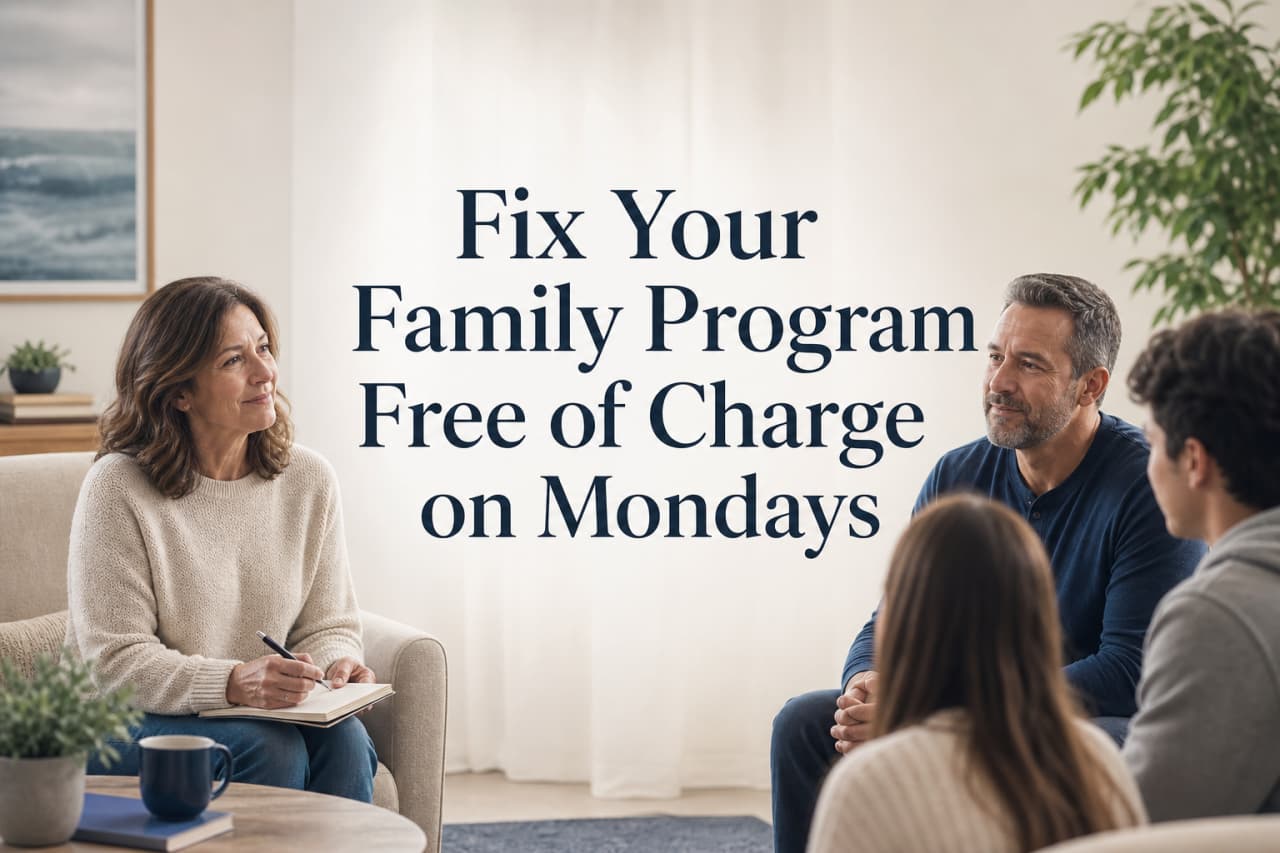
Fix Your Family, our national signature program, meets Monday evenings and is led by Beth Durling, MS, CADCII, ICADC. That group builds communication skills, boundary language, and conflict tools parents and partners can use the same week. The Family Room on Fridays is an open support circle with peer advocates. Morning Meditation runs weekdays as a short virtual practice for anxiety and emotional regulation. The Courage to Detach workshop meets monthly for healthy detachment without cutting off care.
One-on-one family coaching is available by appointment so you can map a plan for an adult child who refuses addiction treatment, a spouse in opioid treatment planning, or a household facing co-occurring disorders. A private messaging group connects you with clinical leadership and peer support for questions between therapy sessions. On-demand modules cover addiction science, codependency, gaslighting, and homecoming after treatment programs.
Credentials matter in free family addiction counseling. Look for facilitators with graduate training in psychology or behavioral health, state or international addiction counseling credentials, and clear scope limits. Our Executive Director brings more than two decades in behavioral health, CBT, family systems, trauma recovery, and spirituality. That mix keeps free virtual family therapy practical rather than vague pep talk.
Donor-supported family therapy and groups are built as a continuum, not a one-visit orientation, so households can keep attending for months. Many families stay in weekly family therapy and coaching while a loved one cycles through readiness. Continuing care means you return to the same support program when relapse risk rises, when someone comes home from a center, or when mental illness symptoms spike alongside use.
Step 3: Live group meetings like Fix Your Family, skills training, and what to expect
What to expect in a first virtual group is simple: cameras optional in some formats, guided topics, and room to speak or listen. Facilitators teach skills you can rehearse aloud—how to talk about money, curfews, rides, and enabling without a blowup. Peer group coaching lets friends and family practice the same scripts so behavior at home starts to match the plan you wrote down.
Self-care is part of the work. Boundary-setting skills protect sleep, work, and other children who live in the house. Prevention training for young people and young adults in the home interrupts the idea that substance abuse is normal coping. We teach that parental addiction is never a child’s fault, and we link prevention to everyday routines rather than scare lectures.
Family education modules and worksheets give you a Relapse Prevention Plan and a Family Support Plan you can visit anytime. Those resources for families cover disease-model language that reduces stigma, so mental and substance challenges are named as health conditions instead of moral failure. Person-first wording helps the whole family ask for help more effectively when shame has blocked the door.
Rural households often ask whether free telehealth family therapy works without a local clinic. Virtual sessions remove drive time and childcare barriers. You still get structured family therapy, coaching, and recovery family education on the same topics city programs cover. If broadband is limited, phone access and short morning practices keep the support program usable.
Other free support groups, national helpline options, and directories
Beyond our calendar, mutual support groups help relatives share experience. Al-Anon and Nar-Anon focus on family members of people with alcohol abuse or other drugs. Families Anonymous offers another peer path. SMART Recovery hosts family-and-friends meetings that use cognitive tools rather than a single-step tradition. NAMI education can help when mental illness and substance use sit side by side.
For the person using, the Substance Abuse and Mental Health Services Administration SAMHSA national helpline and FindTreatment.gov locator help you compare treatment options and treatment facilities. The National Institute on Drug Abuse publishes plain-language science families can read before a hard conversation. Pair those support resources with our free family therapy so you are not carrying the clinical load alone.
A national helpline is built for crisis routing and referrals. Our line at 888-964-8825 is built for registration, family support questions, and guidance into free virtual programs. Use both. Crisis lines stabilize the night. Family therapy changes the week that follows.
When cost blocks addiction treatment for a loved one, we also offer application-based financial aid for residential, outpatient, detox, and intervention support. That aid is separate from free counseling for families of addicts, yet it sits in the same mission: economic limits should not strand the entire family. You can start the conversation on our Get Help page.
How substance use and mental health strain the entire family nationwide

Substance use disorders pull attention, money, and safety planning into one person’s disease. Parents often drop their own mental health appointments. Siblings learn to stay quiet. Grandparents raising a grandchild after a parent’s substance abuse need the same counseling access as any caregiver. Free family therapy is open to those grandparents; kinship does not have to match a narrow form.
Co-occurring disorders—mental and substance use together—confuse households because mood shifts and intoxication blur. Family therapy explains how opioid treatment plans, psychiatric care, and home rules must align. Evidence-based family approaches teach contingency skills, communication training, and relapse cues specific to opioids and other drugs without turning you into an unpaid clinician.
Long-term substance abuse and mental strain leave trauma marks: hypervigilance, grief after near-loss, and distrust. Trauma-informed family therapy slows the pace, names triggers, and rebuilds safety rituals. Screening conversations in coaching can flag when a relative needs their own mental health referral for depression, anxiety, or complicated grief while still staying in our support services.
Culturally respectful language and flexible virtual hours improve who shows up. We speak to households across many states and faith backgrounds with a Christian faith-based orientation available, never as a barrier to entry. Prevention for young adults still at home, plus clear talk about treatment and recovery timelines, keeps hope concrete.
What free counseling for families of addicts at The Family Recovery Foundation is not
Free counseling for families of addicts is not free rehab placement for the patient, not a guarantee of sobriety, and not a substitute for medical care. We do not operate detox beds or locked units. We help families understand addiction treatment pathways, prepare for intervention decisions, and stay steady during treatment recovery transitions.
Insurance is not required for our free virtual family therapy, live groups, coaching, or education library. Insurance may still matter when you search treatment programs or a behavioral health center for the person using. Keep those tracks separate so a denied claim never blocks your own seat in family therapy.
If you need a national substance use locator for a loved one, visit SAMHSA’s tools and trusted pages such as drugfree.org for additional family guides. Then return to family therapy so the household has its own plan. Support for families works best when it is scheduled, repeated, and honest about limits.
FAQ: free family counseling and family therapy
Can I get free counseling without involving my addicted family member?
Yes. Free virtual family therapy at The Family Recovery Foundation is built for family members first. You can join Fix Your Family, coaching, and education while a loved one refuses every door. Change in your responses still reduces chaos even when they stay outside treatment and recovery.
Can free counseling help if my adult child refuses all treatment?
Family therapy helps parents set limits, stop enabling patterns, and plan safety without waiting for readiness. You learn how to talk about consequences calmly and when to bring in professional intervention support. Refusal is common; your counseling still has a job.
Are there free counseling options if the addict has dual diagnosis?
Yes. Co-occurring disorders are a regular topic in our modules and groups. Family therapy explains how mental health care and substance use disorder care must work together, and how home behavior can support both tracks without becoming the treatment center.
Is free telehealth counseling effective for rural families?
Virtual family therapy removes distance as the reason you go without care. Rural family members use the same live groups, coaching, and prevention tools as everyone else. Pair telehealth with 988 when crisis risk rises.
How do free programs handle families after a loved one’s overdose?
After medical stabilization, you need space to process fear and rewrite house rules. Our groups and coaching offer trauma-aware family support, grief language, and practical plans for the next high-risk window. Emergency response stays with 911 and hospital teams; we hold the ongoing work.
Are there support groups for family members of addicts?
Yes. Join our free online support groups and family therapy calendar, and add peer rooms such as Al-Anon, Nar-Anon, Families Anonymous, or SMART Recovery family meetings. Multiple rooms often work better than one alone.
Register for free virtual family therapy and keep going
You already carried enough alone. Free counseling for families of addicts exists so parents, partners, and the whole family can learn skills, protect mental health, and stay connected through treatment and recovery without a bill for our core programs. Start at the free virtual family therapy hub, review live times on /meetings/, or tell us what you need at /get-help/. Call 888-964-8825 any day. You will reach real people who give clear answers and honest hope.
About the Author
The Family Recovery Foundation
Family recovery education teamEducational and program resources from The Family Recovery Foundation — free virtual family therapy and support for families impacted by addiction and mental health.