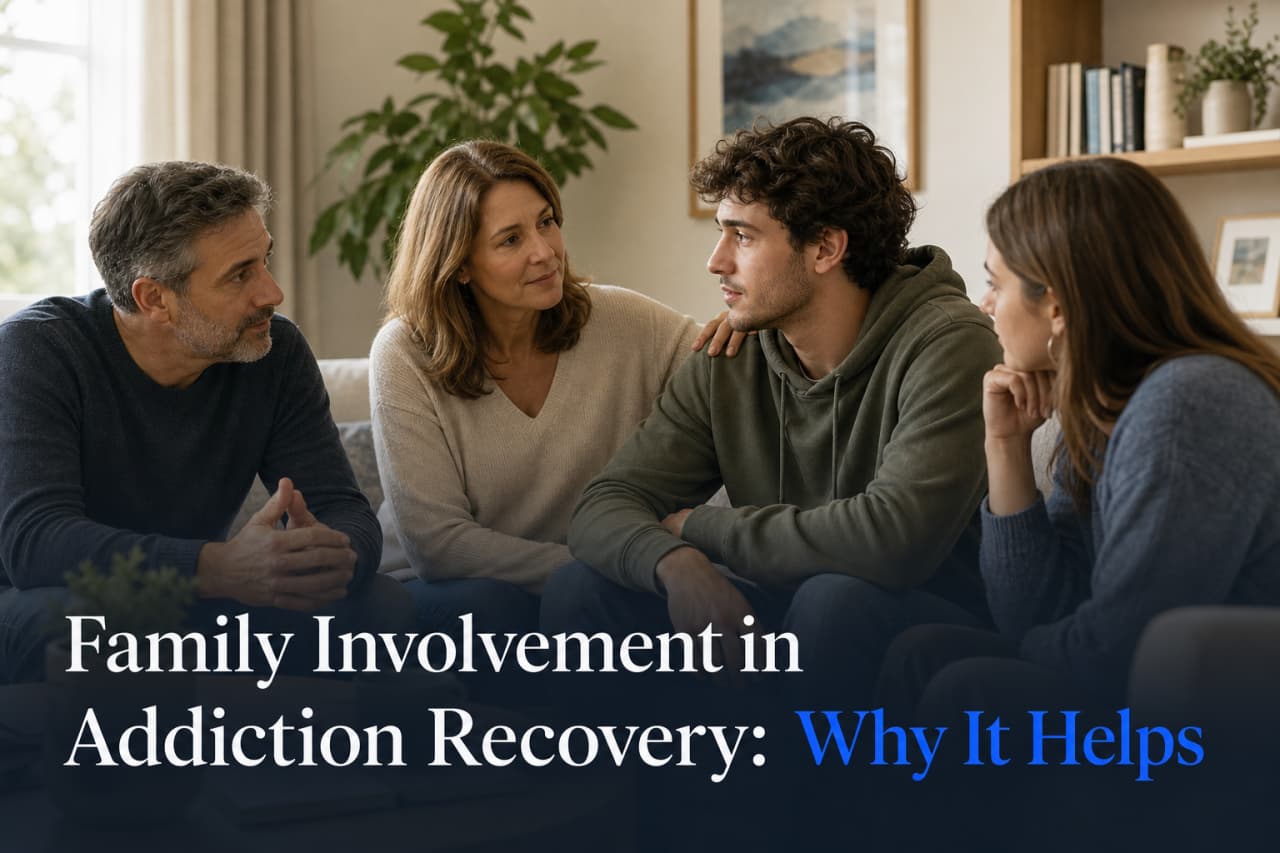
Free virtual sessions cut the commute to zero. Recurring online groups let you lock support onto the same weekday slot every week. To keep family therapy with full time job demands from sliding off the calendar, choose one live session you can actually attend, protect that hour, and use a short weekday practice such as Morning Meditation between meetings.
How can family therapy with full time job demands fit your week?
Start with the recurring session you can attend most often. Then add one short practice. The Family Recovery Foundation offers free virtual family therapy and live online family support nationwide. No insurance is required for free programs.
Our free virtual family therapy hub and family programming page list current registration details. After you register, a confirmation email arrives with the session time and the link to join online.
| Program | Published schedule | What it covers |
|---|---|---|
| Morning Meditation | Monday through Friday at 9:00 AM CT / 7:00 AM PT | A 15-minute guided mindfulness practice |
| Fix Your Family | Monday at 7:00 PM CT / 5:00 PM PT | Communication, boundaries, conflict resolution, and rebuilding trust |
| The Family Room | Friday at 10:00 AM CT / 8:00 AM PT | An open support circle for sharing experiences and asking questions |
| The Courage to Detach | Last Wednesday of each month at 5:00 PM CT / 3:00 PM PT | Healthy detachment, compassionate boundaries, and protection of your wellbeing |
| 1-on-1 Family Coaching | By appointment | Direct work with a certified counselor on your family's situation |
Pick one anchor session. Trying to attend everything usually fails. A caregiver with fixed daytime hours may prefer Monday evening Fix Your Family. Someone who starts work later may have room for Morning Meditation or The Family Room, depending on local time.
Confirm the time in your time zone before you add it to the calendar. Then make it recurring. A session that appears automatically each week is easier to protect than one you scramble to remember at the last minute.
How do you protect therapy time at work?
Treat the live session like a recurring personal appointment. Put it on both your work and personal calendars. Leave a short buffer before it. Decide where you can join without coworkers or customers hearing the conversation.
Keep any workplace request focused on logistics. State the day, time, and frequency of the appointment. You can ask about a longer break, an adjusted start time, or another schedule change without turning a loved one's health information into workplace conversation.
Workplace policies and leave eligibility vary. If you may need formal leave, review the U.S. Department of Labor's Family and Medical Leave Act guidance or speak with your employer's human resources contact. The Family Recovery Foundation does not provide employment legal advice.
Privacy matters during virtual therapy. Use headphones, close unrelated work applications, and join from a private location when you can. Do not attend while driving. If an internet problem or work interruption keeps you out of a session, call 888-964-8825 and ask about the next available option.
One protected session beats five good intentions.
How does Morning Meditation fit a packed day?
Morning Meditation works best as a bridge between family therapy sessions. It runs Monday through Friday at 9:00 AM CT / 7:00 AM PT and lasts 15 minutes. The guided practice helps lower anxiety and steady emotional responses for families living with a loved one's substance use.
If the session falls before your shift, put it beside an existing morning habit such as making coffee or opening your work calendar. If it lands during your workday, use a protected break only when your setting allows privacy and your attention will not be split.
Keep the routine small. Open the session link a few minutes early. Silence work notifications. Afterward, write down one response or boundary you want to practice that day.
The 15-minute format solves a different schedule problem than weekly family therapy. It gives you a fixed weekday practice between longer conversations, without a commute or a large block of time.
What happens if work makes you miss a session?
Return at the next available session. A missed meeting does not erase the calendar plan you built. Trying to make up every missed minute can turn family support into another source of pressure.
Ask our team whether another live option fits that week. Do not assume every session has a recording. Availability and privacy needs can differ by program.
On-demand education can fill part of the gap. The Intensive Family Program has 12 downloadable modules covering substance use, codependency, communication, boundaries, gaslighting, and the transition home after treatment. A Relapse Prevention Plan and Family Support Plan are also available as worksheets.
For rotating shifts, 1-on-1 Family Coaching is available by appointment. The Private Family Messaging Group provides 24/7 access to the Clinical Director and trained peer support team for ongoing guidance. Emergency needs require 911 or 988.
Return at the next session.


How can family members use different schedules?
One caregiver can attend even when the whole family cannot meet at the same time. Before the session, agree on the family concern that needs attention. Afterward, share your family's action point without repeating another participant's story.
Use one concrete tool at home. Module 6 addresses difficult conversations. Module 7 covers boundaries, and Module 10 addresses a loved one's return home after treatment. The Family Support Plan worksheet can help family members record agreed responsibilities and sources of support.
Ask each family member to join a live program directly when their schedule permits. Hearing guidance firsthand reduces the chance that one caregiver becomes responsible for teaching everyone else.
Keep the home practice brief. You might use one agreed boundary sentence for the week or schedule one family check-in. Repeating a usable practice beats a complicated plan that disappears during the next busy workday.
What support is available beyond live meetings?
The Family Recovery Foundation offers 1-on-1 Family Coaching by appointment, 24/7 private family messaging, 12 on-demand education modules, downloadable worksheets, and financial aid for treatment. These options can support your plan when a recurring group does not cover every family need.
Treatment financial aid is application based and may cover residential, outpatient, or detox programs. Funding guidance is also available for professional intervention services when a loved one is not ready to accept treatment.
We provide ongoing family support. We do not operate a residential treatment center, detox program, or emergency hotline. Families looking for national treatment information can use SAMHSA's treatment locator and the National Institute on Drug Abuse treatment and recovery overview.
Choose the schedule you'll repeat.
Common Questions
Is virtual family therapy really free?
Yes. The Family Recovery Foundation offers free virtual family therapy and live online family support nationwide. No insurance is required for free program registration.
Can I join if I work evenings or rotating shifts?
The published schedule includes morning, daytime, and evening options in Central and Pacific time. 1-on-1 coaching by appointment and on-demand education may cover gaps when your shift changes.
Can I seek support for myself if my loved one won't attend?
Yes. Our Get Help form asks if you're seeking support for yourself or a loved one. Programs serve parents, spouses, siblings, and other family members affected by substance use and mental health concerns.
Does this replace treatment for my loved one?
No. The Family Recovery Foundation provides family therapy, education, coaching, and support. We can also accept applications for treatment financial aid, but we do not provide residential treatment or detox services.
What should I do during a crisis?
Call 911 if someone is in immediate danger. For a suicidal, mental health, or substance use crisis, call or text 988 or use the 988 Suicide & Crisis Lifeline. Our programs provide ongoing family support and do not provide emergency care.
Get free virtual family therapy
Register for free nationwide online family therapy and support programs. No insurance required.
Use the Get Help option to register through The Family Recovery Foundation, or call 888-964-8825. A real person answers every day.
About the Author
The Family Recovery Foundation
Editorial TeamEducational and program resources from The Family Recovery Foundation (EIN 87-4108362) — free virtual family therapy and support for families impacted by addiction and mental health. Charity Navigator: charitynavigator.org/ein/874108362.