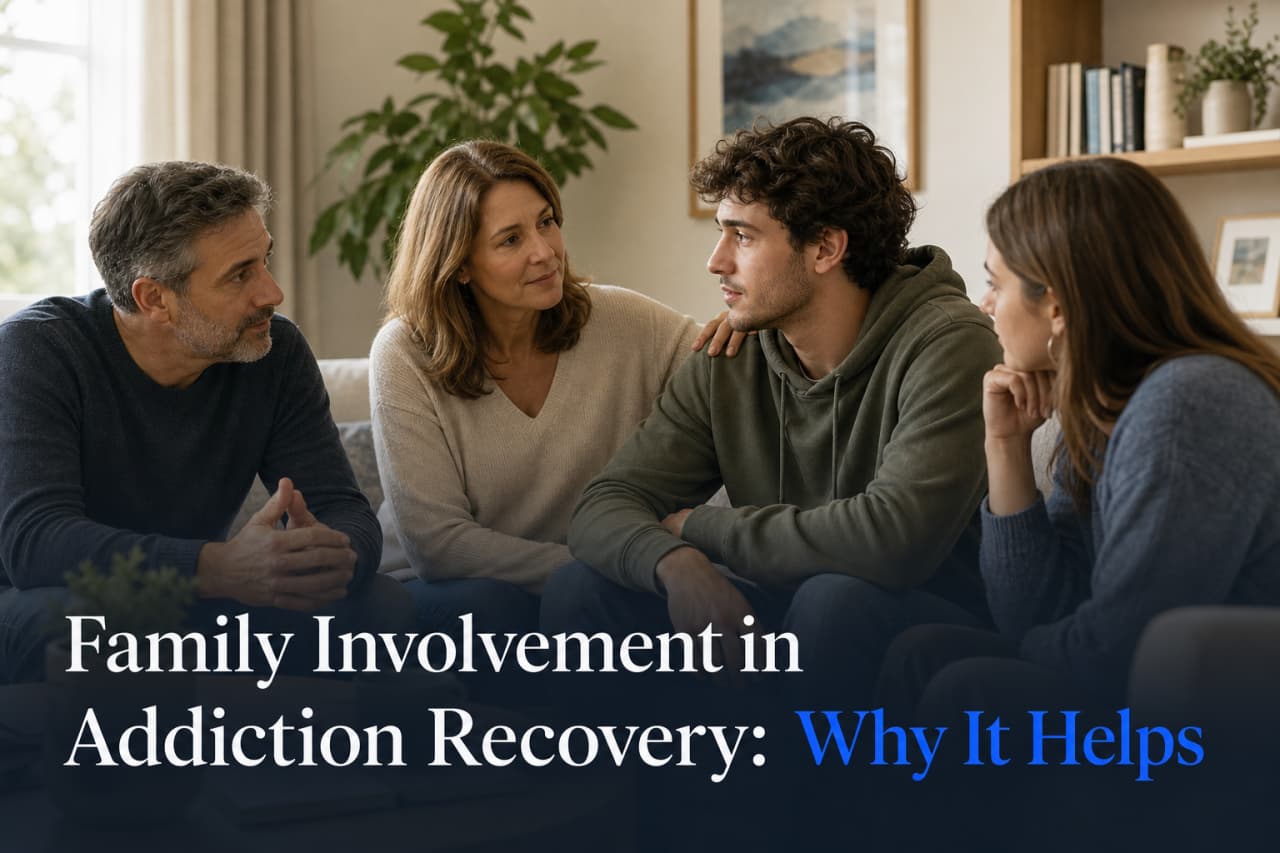
Classmates mention vaping, pills, and alcohol long before high school. Short talks beat one long lecture. Parents who return to the subject with plain facts, clear boundaries, and room for honest answers give kids a steadier frame than a single fear-based speech ever can.
Why short, repeated talks work better than one lecture
Plan several short talks instead of one fear-based speech. The Family Recovery Foundation organizes its work around Prevention, Education, and Support. Your child may hear about alcohol, nicotine, cannabis, prescription medication, or unknown pills at different times. Each moment gives you another chance to ask what they know, correct false information, and repeat your family’s rules. Prevention conversations with kids about addiction work best when they stay brief and repeat.
At The Family Recovery Foundation, prevention means recognizing risk early, building healthy communication, and giving families practical tools before substance use becomes a pattern.
Start with a question your child can answer. You might ask, “What have you heard about vaping?” or “What do people at school say about taking someone else’s medication?” Listen before correcting them. Their answer tells you which facts and pressures need attention.
Questions about stress matter too. Ask what your child does after a bad day, who they talk to, and which situations make them want to escape. Substance use can become a coping strategy, so prevention includes helping your child name distress and ask for support.
SAMHSA’s Talk. They Hear You. campaign offers parents more conversation tools. If you don’t know an answer, say so. Check a trusted source together rather than guessing.
Keep the door open.
Topics parents should cover over time
Cover four areas over time, the same ground our Intensive Family Program walks parents through in structured modules. Talk about what substances do, what your family expects, how your child can leave an unsafe situation, and where they can bring a hard question. You don’t need to fit all four into every talk.
Use the names your child may hear while keeping your language clear. Explain that alcohol, nicotine, cannabis, prescription medication, and other drugs can affect judgment and health. Tell them never to take medication prescribed to another person or a pill from an unverified source.
State your rules directly. A child shouldn’t have to guess how you feel about substance use, riding with an impaired driver, or attending a gathering where adults aren’t present. Give the reason for each rule, then explain what will happen if it’s broken.
Create an exit plan before your child needs one. They can blame you, send a prearranged word, or call for a ride. Tell them who else they may contact if they can’t reach you. Immediate safety should come before a discussion about consequences.
Match the detail to your child’s ability to understand it. Younger children need short rules and concrete examples. Older children can discuss peer pressure, transportation, parties, medication, and what to do when a friend may be in danger.
Our Intensive Family Program covers the definition of addiction, the central nervous system, difficult conversations, and boundaries. Those subjects help parents replace vague warnings with accurate explanations and a clear family plan.
Talking without shame or permanent labels
Use person-first language and describe the behavior you’re concerned about. Our family education programs explain addiction as a disease and teach families to respond with compassion while keeping firm limits. Say “a person with a substance use disorder” rather than turning a health condition into someone’s identity. If your child made a risky choice, name the choice without assigning a permanent label.
The words you use affect what your child may tell you next. Insults, threats, and predictions about their future can push the talk away from facts. Ask what happened, what they were feeling, and what support they needed at that moment.
If your child mentions a friend’s substance use, thank them for telling you. Ask if anyone is in immediate danger. Keep listening before requesting names or details unless safety requires action.
Compassion still leaves room for firm limits. It gives you a way to protect the relationship while addressing unsafe behavior directly.
Stay curious.
Family boundaries that support prevention
Write boundaries that identify the behavior, the safety reason, and your response. The Family Recovery Foundation’s free Fix Your Family session covers this skill each Monday at 7:00 PM CT. “Be responsible” is hard to follow. “Never ride with a driver who has used alcohol or other drugs. Call me for a ride” gives your child a specific action.
Household boundaries may cover medication storage, parties, transportation, alcohol in the home, and communication when plans change. Choose responses you can carry out. A threat that disappears the next morning teaches your child that the stated limit wasn’t firm.
Explain boundaries during a calm period. Ask your child to repeat the plan in their own words. This can reveal gaps such as a dead phone, fear of punishment, or uncertainty about which adult to contact.
The Family Recovery Foundation’s Intensive Family Program includes one module on personal boundaries and another on the language of connective boundaries. Our free Fix Your Family session also teaches communication, boundary setting, and conflict resolution for families affected by addiction and mental health concerns.
Practice before pressure arrives.
What should you do after a disclosure?
Treat a disclosure as information you need to act on, not a debate you need to win. Thank your child for telling you. Then ask what was taken, when it happened, how much was involved, and how they feel now.
Don’t diagnose the situation yourself. A pediatrician or qualified behavioral health professional can assess substance use, mental health symptoms, and the level of care that may be appropriate. Write down what your child reports so you can give the clinician clear information.
If there’s immediate danger or a medical emergency, call 911. For a suicide or mental health crisis, call or text 988. The Family Recovery Foundation provides ongoing family support and isn’t a crisis hotline, residential treatment center, or detox program.
Avoid demanding every answer at once. Your immediate tasks are checking safety, preserving communication, and arranging qualified care when needed. You can address broken rules after those steps.



Families can schedule 1-on-1 family coaching with a certified counselor. Registered families may also use our private messaging group with the Clinical Director and trained peer support team. These services support family planning and communication between appointments, but emergency care falls outside our role.
If treatment is recommended and cost stands in the way, The Family Recovery Foundation accepts applications for financial aid related to residential, outpatient, detox, and intervention services.
Safety comes first.
How can family education strengthen prevention?
Use education to prepare for situations your family hasn’t faced yet. Prevention gets harder when parents wait for proof of substance use before discussing coping, medication safety, peer pressure, or household limits.
Our Intensive Family Program has 12 structured modules. Parents can study addiction science, codependency, difficult conversations, boundaries, gaslighting, and the transition home after treatment. A downloadable Family Support Plan worksheet helps families put expectations and support contacts in writing.
Some modules address adult family patterns. Use those lessons to examine communication between adults rather than placing clinical labels on a child. A young person’s behavior should be assessed by a qualified professional when there are health or safety concerns.
The National Institute on Drug Abuse resources for parents and educators can help you check health information before sharing it. Pair outside resources with your family’s specific rules and exit plan.
The free virtual family therapy hub at The Family Recovery Foundation connects education with live support. You can bring questions from the modules into family therapy, coaching, or an online group instead of trying to interpret every topic alone.
Where can parents practice these conversations?
Choose a live program that matches the kind of support you need. The Family Recovery Foundation offers free virtual family therapy and online family support nationwide. No insurance is required for the free programs.
Fix Your Family meets every Monday at 7:00 PM CT and teaches communication, boundaries, and conflict resolution. The Family Room meets Fridays at 10:00 AM CT in an open support-circle format where families can share experiences and ask questions.
Morning Meditation runs Monday through Friday at 9:00 AM CT for 15 minutes. The Courage to Detach meets on the last Wednesday of each month at 5:00 PM CT and focuses on loving a family member without enabling unsafe behavior.
You can also request 1-on-1 family coaching by appointment. A certified counselor works with your family to build a plan based on the situation you’re facing.
You can ask for backup.
Questions Readers Ask
How early should I talk to my child about addiction?
Start before your child faces a decision involving substances. Use short, concrete rules with younger children and add detail as their questions and social situations change. Early talks can focus on medication safety, healthy coping, trusted adults, and telling you when something feels unsafe.
What if addiction has affected our family?
Share truthful information your child can carry without making them responsible for an adult’s health. You might say, “Someone in our family developed a substance use disorder, so we take these choices seriously and talk about them openly.” Protect private details that your child doesn’t need.
Should I tell my child about my own past substance use?
Give an honest, age-appropriate answer that supports the rule you’re discussing. Avoid turning the talk into a long personal account or using your past as proof that your child will be fine. Bring the focus back to safety, health, and your current family expectations.
What if my child refuses to talk?
End the exchange after one clear point and return to it later. You can say, “You don’t have to answer now, but you can come to me without shame if you or a friend needs help.” Keep your rules consistent even when the conversation is brief.
Can our family use TFRF programs before substance use occurs?
Yes. Prevention is one of The Family Recovery Foundation’s three pillars, and our education programs address communication, boundaries, coping, and addiction science. Free virtual family therapy and online support are available nationwide.
Do the free programs require insurance?
No insurance is required for free virtual family therapy and support programs. Registration, communication, and scheduling take place online, and you can call 888-964-8825 if you need help choosing a program.
Get free virtual family therapy
Register for free nationwide online family therapy and support programs. No insurance required.
Get Help
Visit tfrfoundation.org and select Get Help or Family Programming. You can also call 888-964-8825. A real person answers every day.
About the Author
The Family Recovery Foundation
Editorial TeamEducational and program resources from The Family Recovery Foundation (EIN 87-4108362) — free virtual family therapy and support for families impacted by addiction and mental health. Charity Navigator: charitynavigator.org/ein/874108362.